
Innovation without borders: internationalisation at home projects
Karolinska Institutet is investing in internationalisation at home to provide students with global perspectives without physical mobility. In 2024, four innovative projects were funded to enhance intercultural competence and educational development.
Karolinska Institutet is driving innovation in education through internationalisation at home (IaH). In 2024, four projects were funded through a call on seed-funding by the Board of Internationalisation, supporting activities that strengthen global perspectives without requiring physical mobility. These initiatives align with KI’s Strategy 2030 for global competence and pedagogical innovation.
1. BalticSeaBioMed: an educational escape room for biomedicine
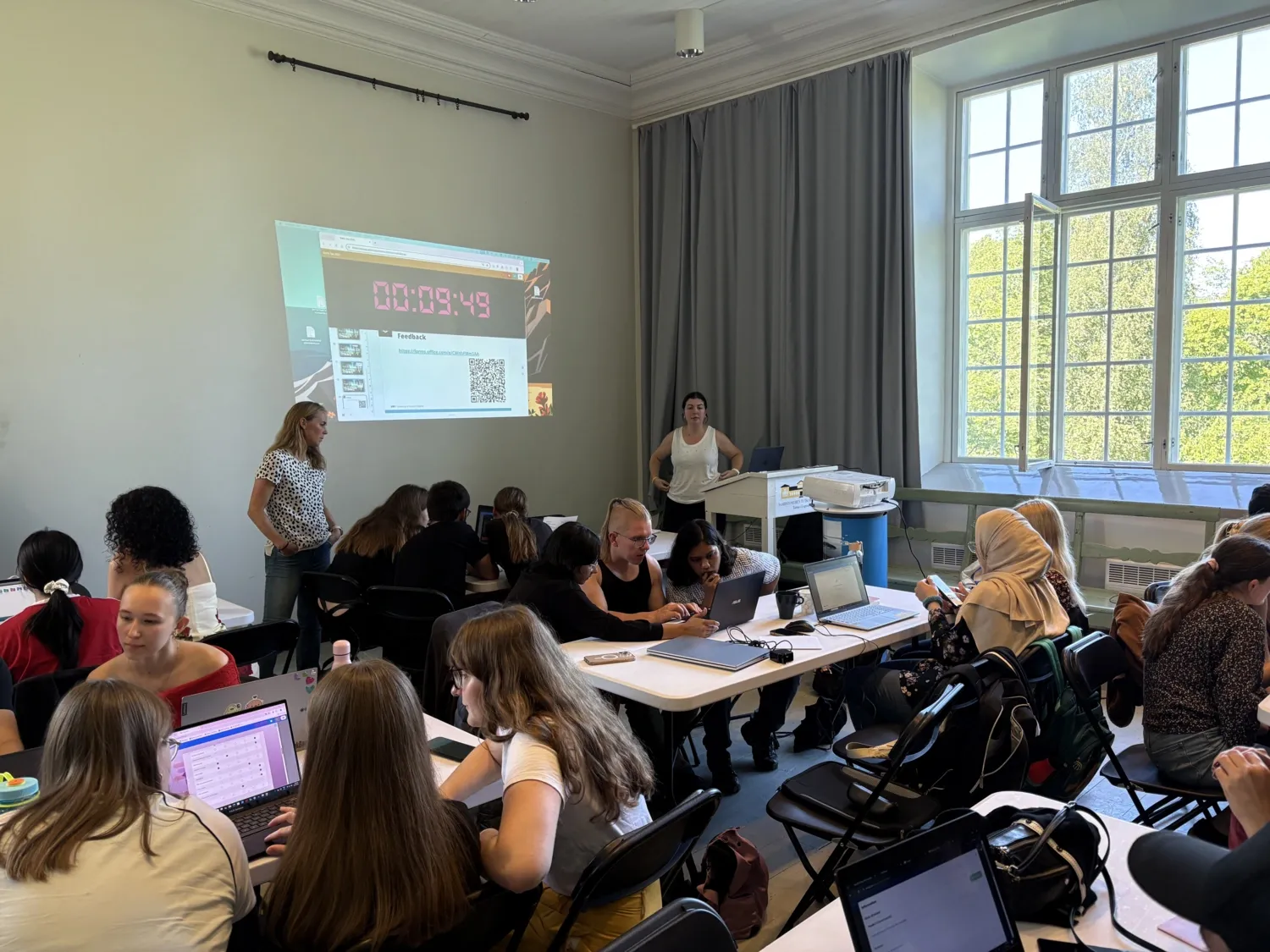
This project connects six universities around the Baltic Sea to create a virtual educational escape room, a first in the field of biomedicine. The escape room combines problem-solving under time pressure with a storyline focused on environmental challenges and human health. Students work in international teams, promoting collaboration and strategic thinking.
The activity was piloted at the network’s summer school and refined for integration into courses at each partner university. The next milestone is releasing the escape room as an open educational resource (OER) and hosting a teacher-training workshop in Vilnius in 2026.
”With our digital educational escape room we have created a dynamic, scenario-based learning experience. Students from different universities in the Baltic region work together to address biomedical concepts that encompass environmental challenges and sustainability, thereby promoting international collaboration and raising awareness of the environmental impact on the Baltic Sea.”
Rachel Fisher
2. Virtual reality for interprofessional and intercultural learning
This collaborative project introduces VR-based case studies to strengthen interprofessional and intercultural skills among students in healthcare education. It has been led by Mandana Fallah Pour, Marianna Moberg and Marie Halvorsen together with a partner in Greece. Students from nursing, physiotherapy and occupational therapy work together in realistic scenarios, for example caring for a stroke patient, to understand different professional roles and cultural perspectives.
A VR film has been produced and is technically completed. The next step is a pilot launch with students and integration into three undergraduate programmes. The project supports KI’s goals of global competence and digital innovation.
3. COIL-seminars with Mayo Clinic and PMU Salzburg
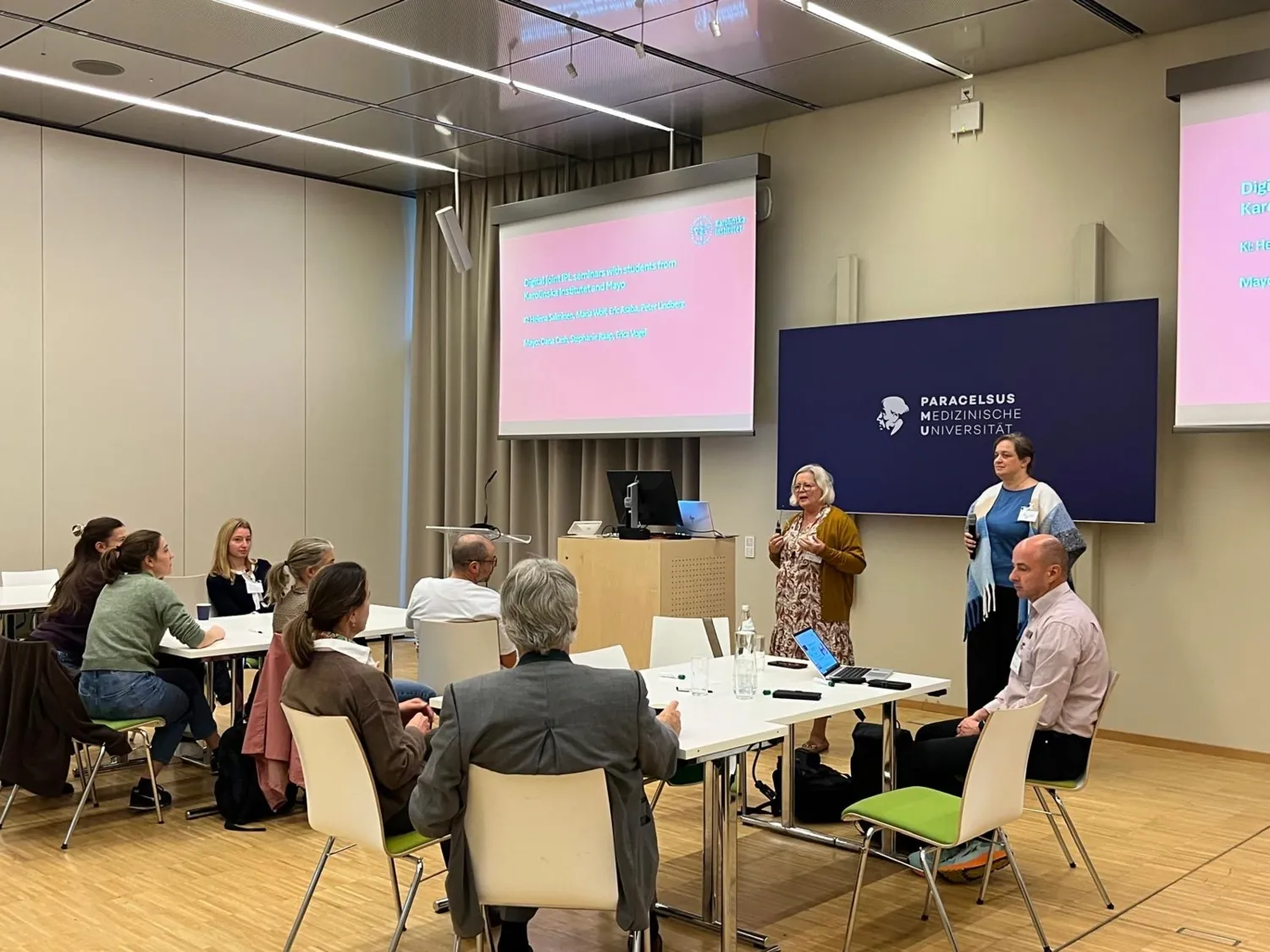
Through Collaborative Online International Learning (COIL), students from KI, Mayo Clinic (USA), and PMU Salzburg (Austria) meet online to discuss patient cases and compare healthcare systems. These seminars allow students to learn with, from, and about each other, building intercultural competence and teamwork skills.
The model has been successfully tested since 2024 and received enthusiastic feedback from students. Plans include expanding to more universities and developing longitudinal cases for deeper learning.
"FUN and KNOWLEDGE BOOST. Learned a lot about interprofessional collaboration" post-it quote from students' evaluation
"Widening horizons professionally" post-it quote from students' evaluation
4. Generative AI for clinical scenario design in Oncology
This project developed a Streamlit-based tool powered by generative AI to create branching clinical scenarios for oncology education. Teachers can now produce complex, interactive cases in minutes, saving time and improving quality. The tool automatically generates content in English, making it ideal for international students and global collaborations.
Future steps include integrating the tool into KI’s oncology courses and adding features like automatic feedback and LMS export. This innovation strengthens both clinical reasoning and internationalisation in medical education.
Why these projects matter
These projects exemplify how digital innovation and international collaboration can enrich education, making global perspectives accessible to all students. By integrating IaH into everyday learning, KI ensures that graduates are prepared for the challenges of modern healthcare both locally and globally.
Allocation of IaH Funds 2024
- Master’s Programme in Biomedicine – Rachel Fisher
- NVS – Interprofessional – Mandana Fallahpour, Marie Halvorsen, Marianna Moberg
- Study programme in medicine OnkPat – Lisa Villabona
- Study programme in Medicine + Study programmes at NVS – Helena Salminen (involved: Maria Wolf and Eric Asaba)