

Hej Per Palmgren!
In our LIME Newsletters we interview co-workers to learn more about their work and what´s important to them.
This edition features Per Palmgren, director of doctoral studies at LIME.
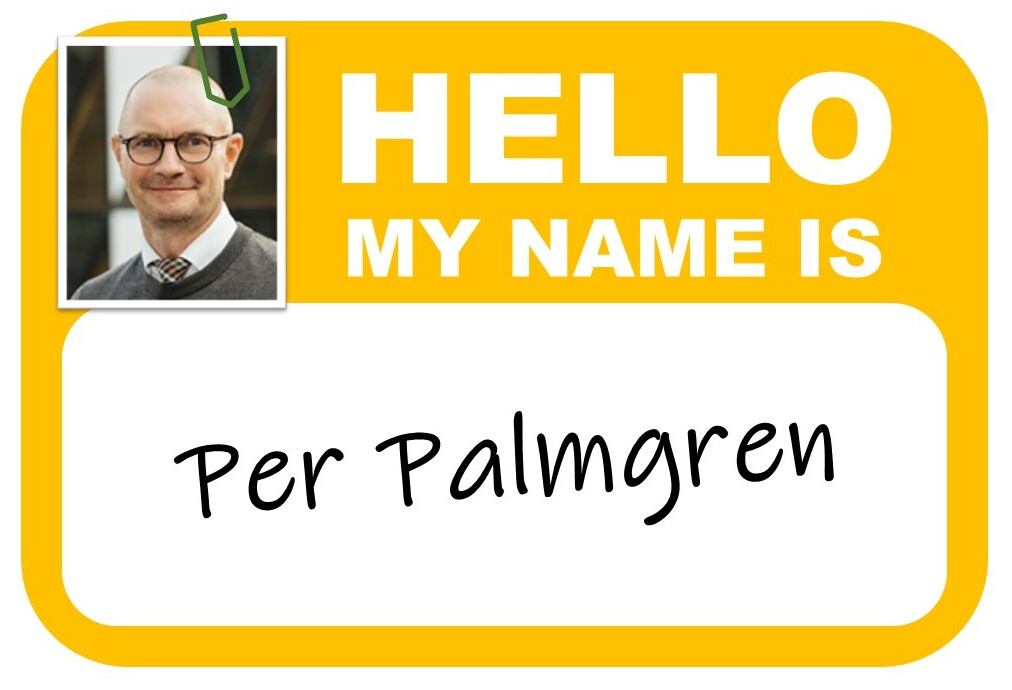
You are one of the persons at LIME who we have been able to follow from doctoral student to researcher! What made you pursue a doctoral degree?
Early on, I trained to become a chiropractor. With a background in dance, I was very interested in understanding muscles, joints, and the biomechanics of the body. During my training, however, I realized that I was less fascinated by the patient encounter than by the student encounter. I became involved in teaching early on, and found that it was the learning situation itself, how students understand, struggle, and develop, that really caught my interest.
This led me to pursue a master’s degree in Medical Education at the University of Dundee. Around that time, I also realized that while a PhD is not compulsory, it does open up many new doors if you want to stay in academia. Through my master’s studies I got the opportunity to continue with doctoral education, and at the same time I established my connection with LIME.
I came to LIME in 2010, started my PhD in 2011, and defended my thesis in January 2016. I was offered a position at LIME directly after my dissertation, and I have stayed since then, continuing to work with research and doctoral education, which still feels like the right place for me.
What do you do now at LIME and could you share what’s the best about that?
I am director of doctoral studies at the department, where I support doctoral students and supervisors throughout the PhD journey, from admission and individual study plans (ISP) to supervision, progression, and dissertation. Other part of my work focuses on research and teaching in medical education, or what is sometimes referred to as healthcare professions education.
I am the course director for four doctoral courses and an iterative workshop series at KI, and I am also part of the management group at LIME. In addition, I serve as course director for a faculty development course in academic teaching that runs each semester. Alongside this, I work part-time as pedagogical leader at the Nordic Institute of Manual Medicine (Naprapathögskolan).
I appreciate being able to keep one foot in teaching and one in research, and especially working at the intersection between the two.

If you had the funds to create any research project – what would it be?
I would develop a research programme focused on postdoctoral researchers in medical academia, exploring how working conditions, learning environments, and career opportunities shape well-being and professional development. I have applied for research funding in this area, altough without success so far.
The programme would include one or two doctoral students working on these questions, allowing for in-depth perspectives over time. I believe that the experiences of particularly migrated postdoctoral researchers, including how they navigate academic work, their sense of belonging, and career uncertainty, is still understudied and represent an area where we need more knowledge.
What are the benefits of working close to students, in your case doctoral ones?
As a teacher, I really enjoy working with doctoral students because they tend to be highly self-directed, self-regulated, and strongly internally motivated. It creates a learning environment where discussions can be both deep and genuinly collaborative.
In my role as director of doctoral studies, I also appreciate being able to act as a bridge between doctoral students’ everyday work, their courses and research projects, and the rules and regulations of the university. It may sound a bit strange, but I genuinely enjoy working with rules and regulations, especially interpreting and applying them in ways that support students’ learning and progression.
Even if work is fun, what do you do in your free time to relax and recharge?
It will probably not come as a surprise, but dance is still a big part of my life, I am involved as a judge, teacher, and speaker at dance competitions. It is a different context, but still very much about learning, performance, and development. In the world of academia I feel a bit exotic being a dancer, but in the world of dance I feel a bit exotic being a university professor.
I also love spending time with my husband, Tom, and our dog, Tango, whether that is in France, where I spend quite a lot of time, or in the Swedish archipelago, which is another place I often return to. Those settings offer a good contrast to academic life and are where I rechage best.

Do you have a motto that you would like to share?
I tend to come back to a simple idea: stay curious. It may sound obvious, but curiosity is often what drives both good research and meaningful teaching and learning. Another phrase I like is: “Strive for perfection, but settle for excellence.” It is a helpful reminder to aim high, while also accepting that progress and quality often matter more than perfection.