

Basic concepts of assessment
Assessing students' learning is crucial for educators, learners, accrediting bodies, and society. We also need to have a basic understanding of the educational frameworks to guide us in assessing students' learning.

Why do we assess?
As a university teacher in the health profession, assessing students in higher education serves several crucial purposes tailored to our field:
1. Ensuring Competency in Healthcare Practices: Assessment allows us to evaluate students' understanding and application of medical knowledge and clinical skills essential for their future roles as healthcare professionals. It ensures that they possess the necessary competencies to provide safe, effective, and compassionate patient care.
2. Identifying Areas for Improvement: Through assessment, we can identify students' strengths and weaknesses, providing targeted feedback to guide their learning and skill development, ultimately enhancing their readiness for clinical practice.
3. Preparing for Professional Certification: Many healthcare professions require licensure or certification exams for practice. Assessments in higher education help prepare students for these exams by evaluating their readiness and identifying areas where additional study or practice may be needed to succeed in these high-stakes assessments.
4. Promoting Lifelong Learning: Assessment fosters a culture of continuous learning and improvement among future healthcare professionals. By engaging students in reflective practice and self-assessment, we encourage them to take ownership of their learning and pursue ongoing professional development throughout their careers.
5. Ensuring Quality Patient Care: Ultimately, assessment in higher education contributes to the delivery of high-quality patient care by producing competent and well-prepared healthcare professionals. By rigorously assessing students' knowledge, skills, and clinical judgment, we help ensure that they are capable of providing evidence-based, patient-centered care that meets the highest standards of quality and safety.
6. Informing Instructional Decisions: By assessing students' learning, educators can tailor their teaching strategies and adjust instruction to better meet the needs of individual students or the class as a whole. Assessment data can highlight areas where instruction may need to be reinforced or modified.
In summary, assessment in higher education for healthcare professionals is essential for ensuring competency in healthcare practices, identifying areas for improvement, preparing for professional certification, promoting lifelong learning and professional development, and ultimately ensuring the delivery of quality patient care.
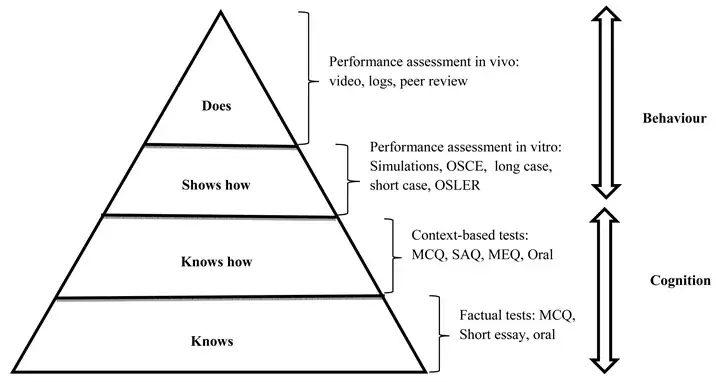
Frameworks for learner assessment in medicine
Assessing students and residents can be a complex task, particularly when balancing professional judgement with the need for transparent and consistent evaluation practices. This guide introduces educational frameworks that can support the development of assessment methods, clarify expectations for learners, and facilitate constructive dialogue among educators. By exploring these approaches, participants can strengthen their assessment practices and contribute to a shared understanding of competence and progression in clinical education.
- Pangaro, L., & ten Cate, O. (2013). Frameworks for learner assessment in medicine: AMEE Guide No. 78. Medical Teacher, 35(6), e1197-e1210.
Related material
Norcini, J., Anderson, M. B., Bollela, V., Burch, V., Costa, M. J., Duvivier, R., Hays, R., Palacios Mackay, M. F., Roberts, T., & Swanson, D. (2018). Consensus framework for good assessment. Medical Teacher, 40(11), 1102-1109.