
“Aiming to create a more sustainable situation for clinical doctoral students”
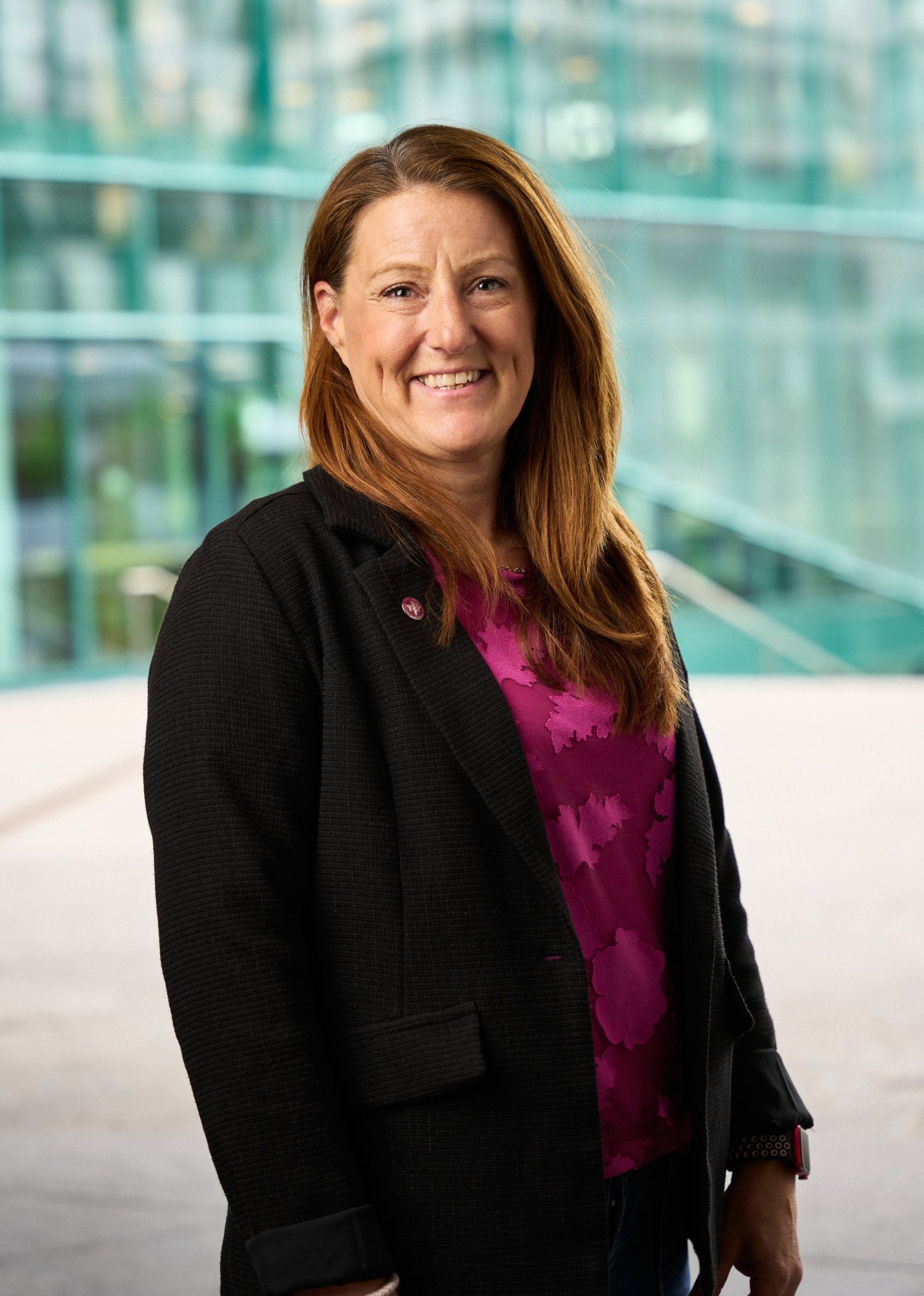
The Dean of Doctoral Education is Erika Franzén, professor at the Department of Neurobiology, Care Sciences and Society. Deputy Dean is Tobias Alfén, read the interview under "More on this topic".
What are you most looking forward to in your new role?
“First and foremost, to building a strong team with a positive, creative group dynamics within the Committee for Doctoral Education. It is important from the outset to create an open and inclusive working environment in order to make sound decisions. This applies not only to the committee but also to the Faculty Board.”
“On a personal level, I am looking forward to taking greater responsibility for doctoral education and having access to a stronger platform from which to drive these issues forward.”
Which challenges would you particularly highlight within your remit?
“There are several challenges where we have made some progress but perhaps not quite reached our goal. Among these is the situation for clinical doctoral students, who need more time for their doctoral studies than is currently available. This requires stronger collaboration between KI and Region Stockholm if we are to succeed.”
“We also need to continue developing transparent career paths and a process for more strategic recruitment. In addition, we need to review the resource allocation model so that it becomes something people feel part of and can contribute to, regardless of their field of research.”
How do you intend to help strengthen and develop collaboration between the university leadership and staff?
“We need to ensure effective communication between the committee and the Faculty Board, with closer collaboration. This will be facilitated by the fact that both I and deputy dean Tobias Alfvén will be members of the Faculty Board. I also believe that the new Faculty Forum will help bring issues from staff to the table.”
“At the same time, it is important that we remain accessible to departments and continue our visits.”
How do you view the relationship between education and research? Does it need to be developed, and if so, how?
“Doctoral education, of course, has one foot in teaching and one in research, so we are – and can be – a bridge that brings teaching and research closer together. We have already collaborated with the other two committees on many issues. This collaboration is now further strengthened by the fact that more of us serve on the Faculty Board.”
“We also need to raise the status of teaching, and one way to do this is to better reward teaching contributions within doctoral programmes. At present, we pay a flat rate sum for doctoral courses, which does not always cover all costs and does not help to raise the status of teaching efforts.”
Where do you see KI in five years’ time?
“In five years’ time, it should be easier to combine research with clinical work. It should be a given that clinical doctoral students are afforded time for their doctoral studies within the framework of their clinical employment. I also envisage more research schools that raise the quality of education and increased funding for doctoral students within the system.”
“We also need to work to ensure that KI feels like a cohesive unit. We have enormous potential but realising it requires all of us to see ourselves as part of the same KI. It should not feel easier to collaborate externally with other universities and groups than internally within KI and with healthcare providers.”
What qualities and experience do you bring that will enable you to achieve your goals as Dean?
“I have served as vice-chair for seven and a half years and, prior to that, I was head of research and development within Region Stockholm. This has given me a strong understanding of the organisational structures and how different processes work, which is crucial when pursuing issues with a long-term perspective. Deputy Dean Tobias Alfvén and I also bring different strengths to the table that complement each other.”
“What’s more, I’m from northern Sweden, so I do not speak more than necessary, I prefer to get things done.”
What is the role of a dean at KI?
Deans and deputy deans are KI’s academic leaders, responsible for quality and long-term development in KI’s core activities: higher education, doctoral education and research. They lead the work of the Faculty Board’s committees, coordinate development within their areas and ensure that decisions are taken with strong collegial input.
Appointed deans and deputy deans 1 July 2026–31 December 2029
Higher education
- Dean: Ewa Ehrenborg
- Deputy Dean: Maria Hagströmer
Doctoral education
- Dean: Erika Franzén
- Deputy Dean: Tobias Alfvén
Research
- Dean: Petter Höglund
- Deputy Dean: Kristina Johnell
From 1 July 2026, the roles will be known as dean and deputy dean (previously academic vice president and vice-chair of the committee).