

“Aiming to strengthen collegial influence in research matters”
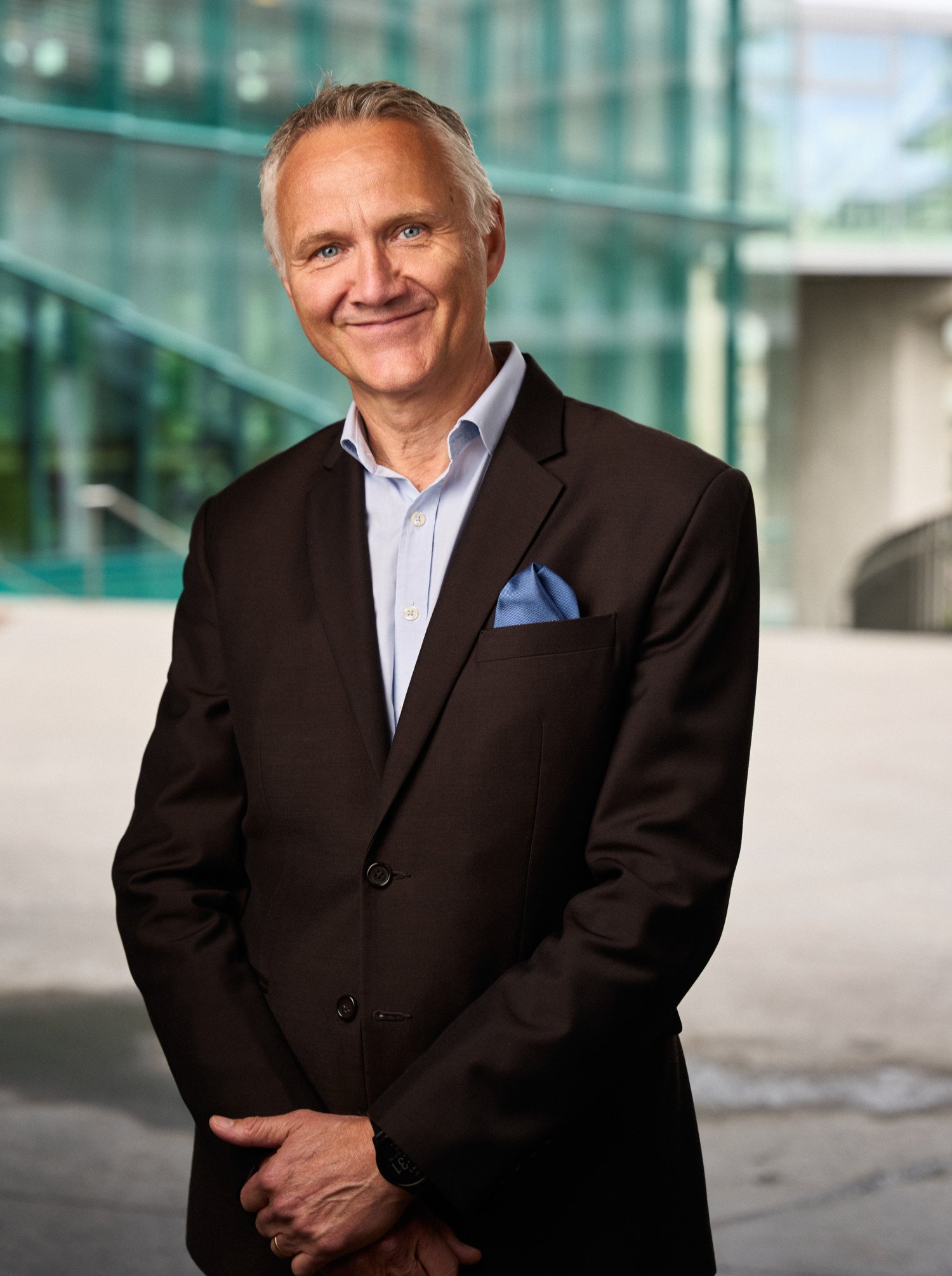
The Dean of Research is Petter Höglund, professor at the Department of Medicine, Huddinge. Deputy Dean is Kristina Johnell, read the interview under "More in this topic".
What are you most looking forward to in your new role?
"Taking responsibility for the broader issues at KI. Many of these relate to collaboration between KI and Region Stockholm, an area in which I already have considerable experience, but I am also passionate about creating better conditions for experimental research. Furthermore, I hope to develop as a leader."
What challenges would you particularly like to highlight within the scope of your role?
“Changes to the allocation of resources have caused both concern and a great deal of discussion. We need to continue monitoring the model so that we arrive at a solution that is acceptable to everyone. This is an issue where the Committee for Research should step forward and take responsibility. ”
“We also need to strike the right balance between the changes we have made to the committees and the Faculty Board, in order to strengthen collegial influence. Among other things, a greater share of the operational work should be carried out by the committees. My aim here is for the committee to take clear responsibility for all matters relating to research, from quality to finance.”
“It is also important that we continue to work on skills provision and future recruitment. Furthermore, we need to ensure that the new structure for research infrastructure is optimised to support research conditions.”
How do you intend to help strengthen and develop cooperation between the university management and staff?
“It will be very interesting to see how we, as deans and deputy deans, can play a more prominent role in the university’s leadership. It is important that the new collegial structure, led by the deans, has regular contact with the president and the vice president, for discussions on strategic issues.”
“At the same time, it is important that we, as a committee, increase our visibility across the departments. The Committee for Research must not operate in isolation, but rather remain closely connected to activities across KI, for example through regular departmental visits where current issues can be identified.”
How do you view the relationship between education and research? Does it need to be developed, and if so, how?
“The integration between education and research can never be strong enough, and we need to maintain active discussions about collaboration with the Committee for Higher Education.”
“I am concerned that being a lecturer and course coordinator carries less weight than being a researcher. This is a difficult issue where the Committee for Research needs to play a part in finding a solution.”
“We also have a structural problem within education, where many who wish to teach do not have the opportunity. To progress in their careers, many researchers need access to teaching posts, but at present this can be very difficult to achieve.”
Where do you see KI in five years’ time?
“By then, I hope we will have a larger overall budget for research and a distribution of resources that is well-balanced and accepted by everyone. We need to ensure that the concept of excellence that KI has embraced in recent years also encompasses clinical research and innovation potential. And we must never forget excellence in education.”
“Following the president’s example, I hope that KI will have become a stronger voice both in Sweden and internationally by participating in public debate as a relevant societal actor. In today’s political and social climate, it is important that we uphold knowledge and evidence as the basis for our positions.”
What qualities and experiences do you have that enable you to achieve your goals as dean?
“I am a good listener and a strong believer in collaboration, always seeking dialogue to ensure that everyone has a voice. I am also thoughtful and do not make hasty, rash decisions.”
“My background has given me broad clinical experience, whilst in recent years I have worked extensively on collaboration issues, including as chair of the R&D committee at Karolinska University Hospital. This has provided me with both knowledge and experience, as well as a broad network.”
What is the role of a dean at KI?
Deans and deputy deans are KI’s academic leaders, responsible for quality and long-term development in KI’s core activities: higher education, doctoral education and research. They lead the work of the Faculty Board’s committees, coordinate development within their areas and ensure that decisions are taken with strong collegial input.
Appointed deans and deputy deans 1 July 2026–31 December 2029
Higher education
- Dean: Ewa Ehrenborg
- Deputy Dean: Maria Hagströmer
Doctoral education
- Dean: Erika Franzén
- Deputy Dean: Tobias Alfvén
Research
- Dean: Petter Höglund
- Deputy Dean: Kristina Johnell
From 1 July 2026, the roles will be known as dean and deputy dean (previously academic vice president and vice-chair of the committee).