
“Aiming to strengthen KI’s international role as a pioneering, collaborative and global institution”
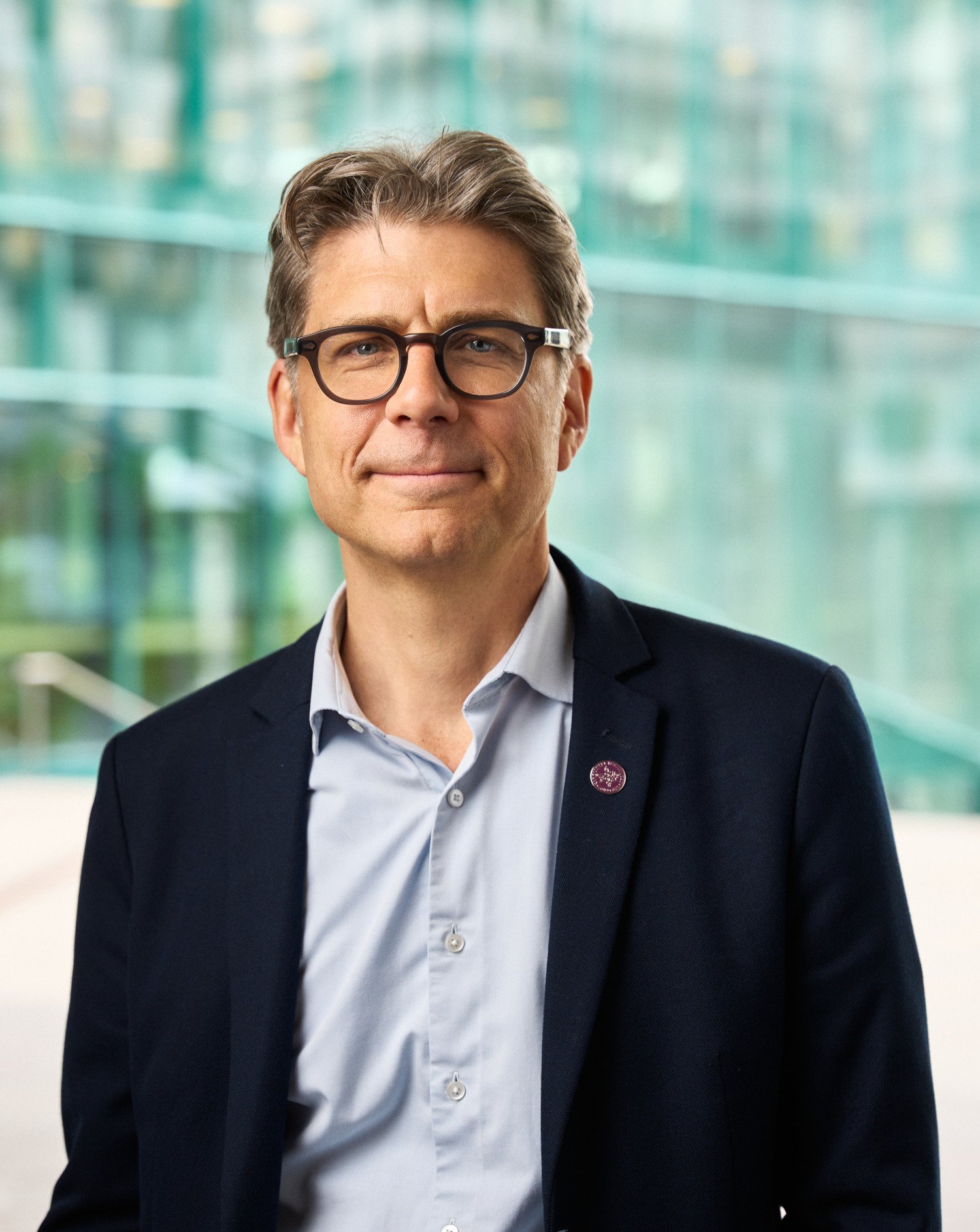
The Deputy Dean of Doctoral Education is Tobias Alfvén, professor at the Department of Global Public Health.
What are you most looking forward to in your new role?
“To work together with Dean Erika Franzén, the Committee for Doctoral Education and everyone else at KI to create the best doctoral programme in medical science in Sweden and the world. It is a mission we share. Doctoral education is one of KI’s core activities, involving a great many people.”
Which challenges would you particularly highlight within your remit?
“One of our challenges is to contribute to sound administrative decisions. Administration is necessary, and we need transparent and legally robust processes, but we also need to review matters such as application procedures, authorisation processes and data extraction, so that it becomes easier to do things correctly without delaying important research and education. Administration should support creativity and quality – not obstruct it.”
“We also need to create better conditions for our clinical doctoral students through improved collaboration between clinical practice and research. I also want to strengthen our internationalisation so that KI is seen as a truly global university, and to help create stimulating research environments at KI with room for creativity.”
“Furthermore, we need to find ways of working in an increasingly fragmented world. Only ten years ago, it was taken for granted that we could collaborate with most countries in the world. But today the situation is more complex.”
How do you view the relationship between education and research? Does it need to be developed, and if so, how?
“It is important that we become even better at emphasising all three pillars on which a university rests: research, education and engagement with society. Doctoral education serves as a link between all three.”
“It is also important to involve research colleagues – from doctoral students to professors – in all our courses. It is during these courses that many prospective doctoral students and researchers are recruited, and by providing opportunities to meet inspiring lecturers, we support this process.”
How do you intend to help strengthen and develop collaboration between the university management and staff?
“It is vital that we all work together to strengthen collaboration. Once again, doctoral education is a great way of fostering this. One recent example that highlighted this was the ‘Doctoral Education Day’, which was held in Aula Medica. It brought together over 500 people for inspirational talks and discussions on the future of research. It felt as though all of KI was present, and this contributes to a strong sense of community.”
“Then, of course, it is important that we continue to develop opportunities for open dialogue, with well-established structures that facilitate communication.”
Where do you see KI in five years’ time?
“I am very proud to work at KI, but would like to see a KI that is even more pioneering, collaborative and global. In five years’ time, I also hope we will have an even stronger, world-class doctoral education, supported by sound administrative decisions.”
“Creating a physical environment that harnesses the potential for creativity and innovation is also important. Hagastaden is an excellent example of an environment that brings together researchers, students, clinicians and pharmaceutical and medtech companies. In addition, there is access to inspirational lectures and cultural events through the collaboration behind initiatives such as The Cell. All of this creates better conditions for new encounters and progress.”
What qualities do you bring that will enable you to achieve your goals as Deputy Dean?
“If you are nominated for a position, you must do your best to contribute to positive change. I learnt that as chair of The Swedish Society of Medicine. And if you really want to change something, it actually is possible. There are many positive forces in society that will contribute to this.”
“In addition, Dean Erika Franzén and I complement each other very well. Our different backgrounds will enable us to achieve our shared goals.”
What is the role of a dean at KI?
Deans and deputy deans are KI’s academic leaders, responsible for quality and long-term development in KI’s core activities: higher education, doctoral education and research. They lead the work of the Faculty Board’s committees, coordinate development within their areas and ensure that decisions are taken with strong collegial input.
Appointed deans and deputy deans 1 July 2026–31 December 2029
Higher education
- Dean: Ewa Ehrenborg
- Deputy Dean: Maria Hagströmer
Doctoral education
- Dean: Erika Franzén
- Deputy Dean: Tobias Alfvén
Research
- Dean: Petter Höglund
- Deputy Dean: Kristina Johnell
From 1 July 2026, the roles will be known as dean and deputy dean (previously academic vice president and vice-chair of the committee).