

Fire Safety in Biomedicum
Here you find routines and regulations for fire safety
In case of fire
Read more about Karolinska Institutet routines in case of activated fire alarm on the KI staff pages.
In case of fire:
- Save yourself and persons that are in immediate danger.
- Alarm SOS - Call: 112.
- Try to extinguish the fire if it doesn't involve a risk!
- Close door/doors that are adjacent to the fire.
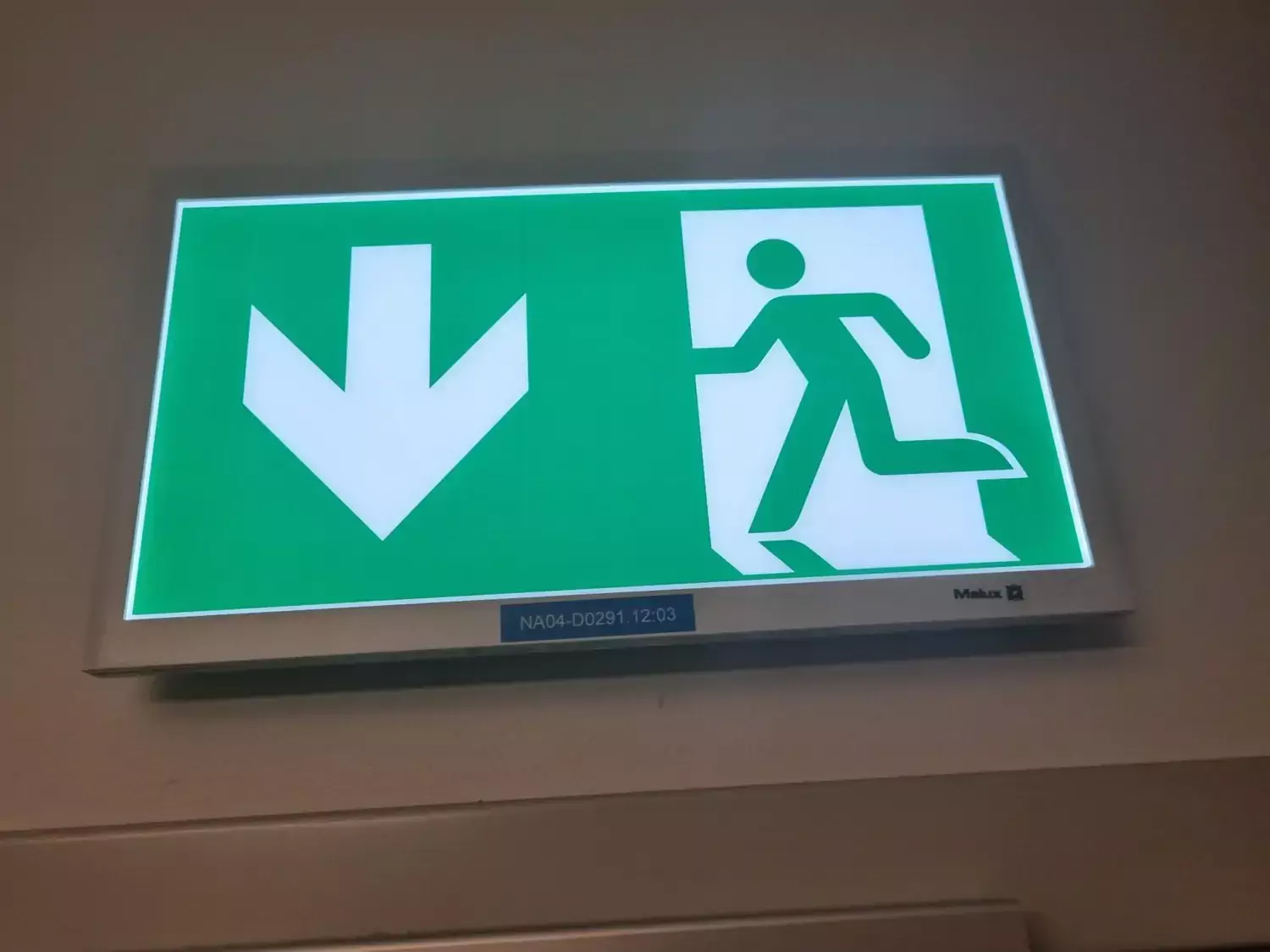
- Evacuate to the assembly point by following the green evacuations signs. (See assembly point in the picture below.)
- Wait in the assembly point until further notice have been given by the Fire bridge or Akademiska hus. Do not enter the building until it is ensured that the building is safe!
The fire alarm at Solna Campus and Biomedicum automatically alerts the Stockholm Fire Brigade. However, it is important to always call SOS ALARM 112 to give them more information regarding the fire.
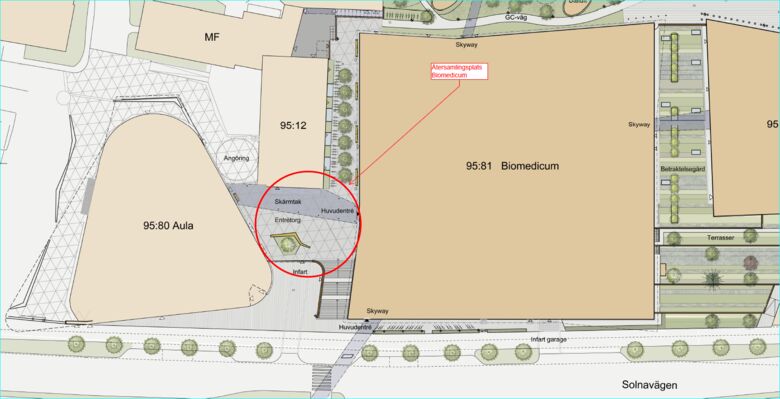
Evacuation Strategy in Case of Fire Alarm
Biomedicum has a comprehensive technical fire protection which means that it is not always necessary to evacuate. Whether you need to evacuate or not depends on where in the building the fire is located.
Step 1
You should always check the nearest fire display panel to see where in the building a fire has been detected. If the fire alarm has not been activated in your section or in the area where you are located, you do not need to evacuate. However, it is important to stay alert and be prepared to evacuate if necessary, as a larger, building-wide evacuation may be required. Based on the alarm information, appropriate actions and escape routes can be assessed.
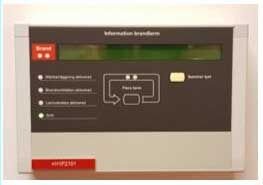
Step 2
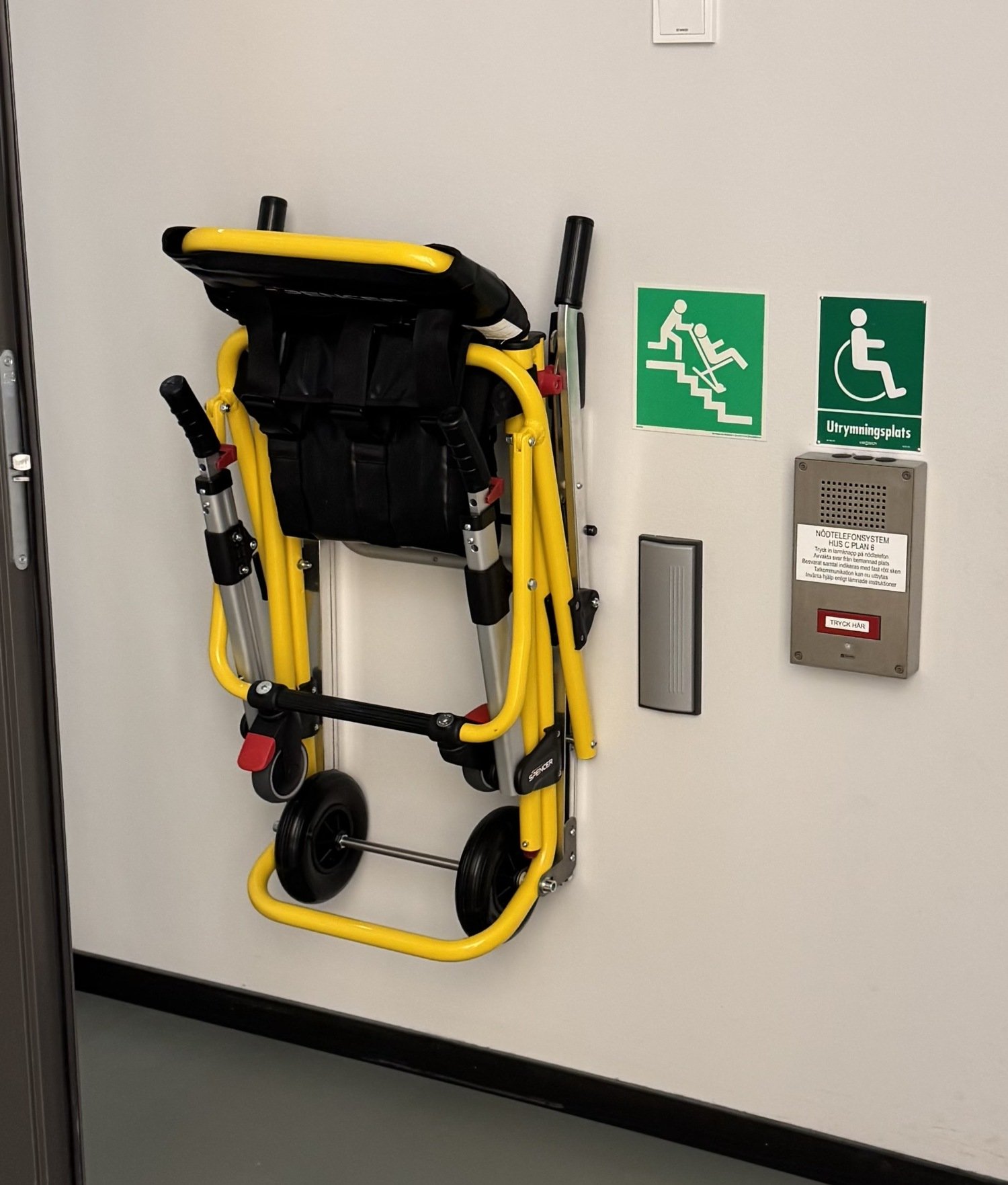
If the fire display panel shows that a fire alarm has been activated in the area where you are located, follow the green evacuation signs and proceed to the assembly point.
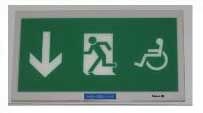
If you are unable to evacuate via the stairs and reach the official assembly point, follow the emergency evacuation signs marked with a wheelchair symbol. These signs lead to temporary evacuation stations equipped with emergency telephones to security personnel, which are separate fire cells. The stations are located in the stairwells of Houses A and C on every floor, except the 3rd floor, where the evacuation route leads directly to an outdoor emergency exit. An evacuation chair is installed in the C stairwell on the 6th floor.
Never use the elevators in the event of a fire alarm.
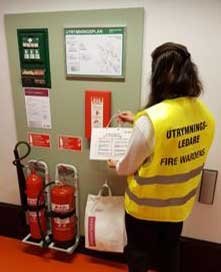
Evacuation Leaders/Fire Wardens
Since KI employees are highly mobile and have a high staff turnover, Biomedicum do not have appointed Evacuation leaders. The organization is based on the strategy that anyone can act as an evacuation leader.
In the event of an evacuation situation, the first person to reach the evacuation station puts on the vest and follows the instructions on the Evacuation leader instruction card.
The Evacuation leaders are responsible to check through the premises and instructing colleagues to evacuate to the assembly point. However, it is important to emphasize that everyone has a personal responsibility to evacuate, and to follow the Evacuation leader's instructions.
It is the Evacuation leader who has contact with a technician from Akademiska Hus or the Fire Brigade when they arrive on site for announcing – when confirmed by the Fire Brigade or the technician – that it is safe for employees to re-enter the building.
Read more about the Biomedicum evacuation strategy at procedures in case of emergency in Biomedicum.
Fire safety training
It is important that you feel safe on campus and at your workplace. Knowing what to do in the event of an fire alarm and how to deal with a fire at your workplace is an important part of this, as is knowing how to prevent fires within the context of your work.
KI offers all employees fire safety training, including both theoretical and practical content.
Workplace introductions
In addition to KI fire safety training, new employees should also be given an introduction in workplace fire safety.
The group leaders are responsible for ensuring that new employees receive introductions, but it is normally the Fire Safety Controller at the quarter who carries out the actual induction.
A checklist has been drawn up, detailing the points that employees need to know about fire safety in the workplace.

Note that premises, or part of premises, where open handling of flammable goods may cause an explosive atmosphere, requires EX classification and an area classification plan. To avoid explosive environments to arise it is preferable to handle flammable goods in closed systems or in ventilated areas (fume hood, benches etc). For more information, see KI's rules for flammable goods.
Fire Safety organization in Biomedicum
The KI’s fire safety organisation is designed so that the departments themselves can take responsibility for the working environment and deal with fire safety issues that arise within their operations.
The Facility Management support the departments and work to inform, guide and organize fire safety activities at Biomedicum.
By working systematically with fire safety, KI shall ensure that the risk of a fire breaking out and the consequences of such an event are minimized as far as possible. Preventive action, training, self-monitoring, routines and guidelines play key roles here.
As an individual, you have an important part to play in minimizing the risk of a fire, and everyone at KI has a joint responsibility to protect our working environment.
It is the responsibility of all staff to follow the KI fire safety rules, to daily make sure that evacuation routes are kept clear and problems with emergency showers, fire blankets or fire extinguishers are reported to the fire safety representative.
- DAILY: Evacuation routes should be kept clear and problems with emergency showers, fire blankets or fire extinguishers should be reported to the fire safety supervisor.
Responsible: All staff - QUARTERLY: Inspection of emergency routes, emergency signs, emergency showers and fire blankets. Ensuring that fire extinguishers are checked. Any problems are reported to the fire safety supervisor
Responsible: The fire safety controllers - ANNUALLY: External party revisions of fire extinguishers.
Responsible: Central administration at Karolinska Institutet and Akademiska Hus.
Biomedicum's fire safety representative
Jennie Eldh Bastman
On parental leaveBiomedicum's flammable goods representive
Stefan Klinter
Team ManagerJennie Eldh Bastman
On parental leaveFlammable goods controller
1-2 persons from each quarter or group
FM is responsible for all common areas.
Fire safety controller
1-2 persons from each quarter or group
FM is responsible for all common areas.